The Caretaker’s Conundrum and COVID

My heart is heavy. This is a difficult post to write. Even as I write it, I question the wisdom of positing it, due to fresh and raw emotions and it may ruffle feathers. I am saying right now that I am not writing this to make a political statement, to make anyone feel bad, to change minds, or anything like that. I am writing it because I started tbispouse.com with the intention of being real and expressing the good and bad (and fuzzy) of the life of being a caretaker.

First, I need to give you the backstory and the issue. Then, I will discuss why I am writing this on this site, a blog about being a caretaker of someone with a TBI and how that impacts my life.

I have only 1 sibling, a loving, wonderful sister. I am 7 years older than her. For most of our lives, we have lived in separate households and in different parts of the country. These factors made having a strong sisterly relationship difficult especially when we were younger – when I was a self-absorbed teenager and she was a young girl. We have worked hard over the past 10-15 years to foster a relationship now that we are older and age does not matter as much. Because we still live in different states, seeing each other is a rare occurrence.

My sister is having a wedding which is a happy and joyous thing and hopefully a one-time event. However, she is planning and having the wedding during the pandemic, COVID-19. I desperately want to be at my sister’s wedding. If there are but a few moments in our lives when I should drop everything and be there for her, this is one. I am a bridesmaid in her wedding and my daughter is a flower girl. Not only do I want to be there to witness her marriage but I want to see our other family, who I don’t often get to see either. I want to meet her fiance, who I have not yet met in-person and his family. I want to reconnect with her dad (my step-day) and his family, who I haven’t seen in more than a decade. Many of the above mentioned people have never met my daughter, Eva, and this is an excellent opportunity for that.

As a caretaker, I have to consider the risks and consequences my decisions will have upon my little family. I do not live in fear but I do believe that I need to be cognizant of more than myself when I am weighing the impact things I do may have upon my husband and daughter. I would hope that most people do this but I think it is an ever present, elephant in the room if you will, thing for us caretakers of the world.

With this COVID world we humans live in now and the uncertainty of the impact of COVID, who it impacts or doesn’t, who is high-risk or not, and so on, I am being forced to weigh the risk between attending my only sister’s wedding and the safety of myself and my family. The implications of attending a 150 person wedding, with little-to-no precautions being taken at the multiple wedding-related events, with guests flying and driving in from all over the United States and world, I am not sure I can risk it.

I have had to make many decisions, both large and small, with my husband being the priority. It is a pill that is sometimes hard to swallow as a caretaker. There are times when it would be much easier to let myself have a pity-party and blame my declining to do “x” thing on my husband. To let myself bemoan him and his burdens. To tell myself that it isn’t fair, that he always comes first, what about me. Whenever I find myself doing this, I try to step back and evaluate “x” thing in a logical manner, not an emotional one. I ask myself, “What is the right thing to do based upon the data, facts, and information I have at the moment.” I also remind myself that I love my husband, that he is one of the best things that has ever happened in my life and continues to be, that he is my emotional bedrock as much as I am his, that he is my best friend.

As I consider this specific situation, the issue is not solely with my husband, who is high-risk. In this case, I must take into consideration that I or Eva may get COVID and not do well with it. I do have A type blood for example. If I were to attend the wedding with Eva and bring COVID back home and any of us were to get very ill or die, living with the knowledge that I could have chosen differently, in this case, would be excruciating. It is a very different situation were I to get COVID from grocery shopping or going to work and getting my family sick in this way. While it would be tragic and horrible, I could live with myself.

As a caretaker, if I get sick, taking care of me, Eva, and the household falls upon John. This would be a task he would do but would not do well and the longer it went on, the worse it would become. If he and I get sick, who takes care of Eva? If we all get sick, who takes care of us? If our mom, who lives near John and me, plus John and I get sick, who takes care of her?

I have not yet decided if I will attend the wedding or not. I am hoping that the states will take stronger measures to lock things down, that people will begin to wear masks and take larger precautions, and maybe the numbers will start to decline. But, with only a month to go, it is not looking good and this is why I am an emotional mess at the moment.

As always, please leave a comment if you have questions or feedback. Stay safe. I am sending love and positivity out into the world.

Symptoms

Traumatic brain injuries are like Baskin-Robbins, 31 different flavors. Each brain injury is different and unique to the individual. There are some common symptoms however. Below are listed the symptoms John has, followed by those that he does not have but that others may. The lists are not inclusive. If I have missed a symptom, please let me know.

I pulled my symptoms from my own experience with John but also with the help of the Brain Injury Alliance which offers a good list of symptoms.

John’s diagnosis is mild TBI with post concussive syndrome, with multiple losses of consciousness.

John’s Symptoms

In no particular order:

  • headaches
  • sees dark shapes in peripheral vision (he says they look like rats running against the floor boards)
  • double vision at distances
  • vertigo/balance (feels like he’s on a moving boat)
  • sleeping trouble
  • word recall issues
  • executive functioning problems – executive functioning is “the ability to organize and maintain behavior and change self-direction” (https://www.biausa.org/)
  • dysphagia – difficulty swallowing
  • dysphasia – “a condition that affects your ability to produce and understand spoken language. Dysphasia can also cause reading, writing, and gesturing impairments.” (https://www.healthline.com/health/dysphasia)
  • impulsive
  • difficultly reading and writing now (It takes 30 minutes of extreme concentration for John to type a few sentences of an email.)
  • frustration and anger at the loss of self and remembered abilities. (John’s background includes work in special ops; graduating summa cum laude with an MA in history and only having taken a page of notes due to a photographic memory; and graduating as a drug recognition expert as the youngest officer to do so with the shortest amount of time on the job. He remembers his ease of functioning through life before the accident.)
  • difficulty maintaining relationships
  • tremors
  • short term memory loss

Other Symptoms

  • seizures
  • personality changes
  • difficulty with reality
  • taste and smell changes
  • monotone speech

Those with TBIs have an increased likelihood of developing dementia and Alzheimer’s, as well as Chronic Traumatic Encephalopath (CTE). CTE has been especially common for professional athletes such as boxers and football players.

If you have any questions, concerns, or comments on this post, please leave a comment.

Honey-do Hell

After Eva went to bed tonight, John and I decided to finish watching the second “Hunger Games” movie and started part 1 of the third movie. (Do you also have a hard time finishing a movie in a single sitting? Not sure if this is TBI related or simply over worked and exhausted parenthood…hmm…I digress.)

We paused and stopped the third movie at about 10:30. John rolled over and asked if I was ready to start our evening bedtime ritual of spooning. (I’ll skip his actual, more crass, language. Ha!) I said, “Well, yes, but you still need to see if the cats want in.” As he was bemoaning having to get out of bed to do this and I was starting to smile, I added, “And, you need to turn on the A/C.” (Which he’d asked me to remind him of before we started the movies.) Finally, I said, “And, turn on the fan.” Now, half way through my saying the fan piece, I was already throwing off the covers and getting out of bed to turn it on myself, knowing that it wasn’t fair of me to task him like that – TBI or no. We were both starting to laugh by now.

After getting the fan, I started to walk towards John and the bathroom. We were both giggling and he said, all mock-huffingly, “Here you are giving me a rapid fire to-do list and at this hour. You’ll wake up and the heater will be on, one cat will be inside, the other out, and I will have forgotten my medication but taken a viagra instead.”

I about fell over laughing. I’m not sure who else will find this situation as funny as we did. Thought I’d share a very current, very real, and very us moment regardless.

On a side note, some may be curious why we need both the A/C and the fan on while we sleep, especially when it’s 55 degrees at night where we live. Well, we have two cats that love to snuggle at night, we like to snuggle ourselves, and since having Eva, John regularly complains that I’m my own personal furnace at night. I or we roast each other nearly out of bed at night. Hence, the cooling aids.

Temper Tantrum Tuesday

Adult temper tantrums, meltdowns, hissy fits, whatever you would like to call them, they are real. I was going to share a memory from my past, where John lost it over attempting to hang a towel rod in our bathroom. Instead, I am going to share an experience I had with John this morning which is very fitting, as today is, in fact, a Tuesday.

Yesterday, I was leisurely scrolling through my phone when the right side of my neck spasmed and I suddenly had a jarring pain from the base of my neck to the bottom of my shoulder blade. I woke up this morning with that pain even worse and spent the first 30 minutes not working out but stretching and gingerly trying to get my neck and head to move a bit more naturally. Needless to say, I was a bit emotionally tender, in the way that you may feel if you’re getting sick or just want to be held.

I’d come upstairs from stretching at 7:00 and gotten dressed for my work day. John had woken up at his typical 6:30 alarm and was lying in bed trying to wake up and looking at his iPad. As I was about to head to the kitchen to prepare my lunch bag, our cat jumped onto the bed, padded over to John’s side, and proceeded to paw at and lick John’s face. This is a very annoying quality about this cat (we have two). He does this at either 4 am or when we are least in the mood for this sort of behavior. (Sounds pretty typical of cat behavior, right?) As I was heading out the bedroom door, I heard John’s irritated voice quickly turn into one of anger (a low, teeth gritted, very masculine tone), telling our cat “not now…give me a minute!” I stopped and, taking matters into my own hands, picked up our cat and put him outside in the hallway and closed the bedroom door. I knew that John would not have taken the rational step of putting the cat outside; instead trying to ignore or expect the cat’s behavior to change, hence making John even more irritated – the cat continuing to try to be lovey-dovey – John becoming more angry – and so on until John blew up in an irrational emotional fit, causing the whole house to be effected.

Resolving this possible scenario, I left the bedroom and proceeded to finish getting ready for my work day. I was on the verge of running late and remembered I needed to print a document for John before leaving. I attempted to do this but was unsuccessful. In annoyance, I went back upstairs and opened the bedroom door (letting the cat back in) and started talking to John about the copies. The cat immediately jumped back up on the bed and proceeded to attempt the previous behavior; sending John into the same angry tone of voice and starting the entire thing over again. (Am I writing a “The Three Stooges” episode?) Because of my neck pain, running late, and simply the intensity of these early morning emotions; I said something to John to calm down and then listened to John as he proceeded to vent to me that he was just trying to get an email written, that he’d just spent the last 45 minutes typing one and with the cat coming over the chances of that email being erased or sent too soon was high, he was tired, had a headache, was trying to multi-task, and just wanted to complete a sentence without being interrupted – ending all with, “I’m having a TBI moment.”

After taking a deep breath, I said, “I know” and started to head out the door to leave the house. He said, “Well, are you going to give me a kiss?” I said, “Yes, I already have.” Which I’d done just a moment before, just before the barrage started, and wasn’t too inclined to do again because it meant bending down to reach him on the bed when doing so was very painful for my neck. As I kissed him a second time, I wondered if John was having a memory lapse due to his temper tantrum.

As I was leaving the house, I nearly started to cry. I got into the car and started replaying the events of the last 15 minutes in my head, trying to understand why I was nearly crying over such a simple thing. I realized this was all just a TBI moment, paired with my not feeling well and being stressed out about getting to work on time.

The culprit – our cat Speedy. I think this pic was taken whilst he was attempting a lick to the face.

The Importance of Routine

We have both always been planners. Spontaneity is something we just can’t appreciate in the way that people who are spontaneous can. While some find this trait to be darn right annoying, I find it to be one of my greatest strengths. In the case of having a life partner who suffers from a TBI, this quality is, in my opinion, a necessity.

John’s daily routine is necessary. The structure of it allows him to function at a higher level and allows him to have more frequent good brain days than fuzzy or bad. Surprises are not good for TBI’s.

His daily routine is as such:

  • 6:30am – Wake up to alarm. (This is everyday – weekends, holidays, vacations, or if he stayed up too late the previous night.) Immediately takes 400mg of Motofinal.
  • 6:40-7:30/8:00 – Return to bed for 30-90 minutes. This generally includes just closing his eyes and resting, not returning to sleep.
  • Once up, he drinks 2 cups of coffee.
  • Gets Eva prepared for daycare and drops her off. (During the weekdays.) They both love their daddy/daughter mornings together by the way.
  • 9:30 – Returns home. Works on conducting administrative chores such as paying bills, managing doctor’s appointments, or trying to manage the Sisyphean task of dealing with Veteran’s Affairs.
  • Noon – Workout routine at home.
  • 1:00-3:00pm – Depending upon energy level, will accomplish another to-do item.
  • 3:00-5:00 – Takes a 60-90 minute nap. We ask our friends, family, and doctor’s offices to not call during this time.
  • 5:00 – Wakes up and either prepares dinner or helps do so.
  • 5:45-8:00 – Spends time with family.
  • By 8:00pm, he is laying down to unwind.
  • At 10:00, he takes Propanonal, 450mg of Wellbutrin, some other drugs for other health issues, and medical marijuana. (Note: without the marijuana, he cannot sleep due to anxiety, difficulty quieting his brain, and headaches.)
  • By 11:00-11:30pm, he is asleep. He goes to bed late because he can only sleep for 6.5 hours before he naturally wakes up, alarm or no.

The entire family is impacted by John’s TBI routine. John and I worry sometimes about how the routine effects Eva. I think the structure is good for kids in general but she also has learned to alter her behavior during John’s nap times. She will say things like, “Dad’s sleeping. We need to be quiet.”

I have learned to appreciate the routine in a unique way. When we are on vacation or living day-to-day, I am also forced to slow down, take breaks, and not overfill our time. John’s needs force me to slow down and appreciate the relaxation more.

Another thing about loving someone with a TBI is that I must be a timekeeper. This is particularly true when we are away from the habits and comforts of home. An example: we both enjoy going to museums. I have learned that I must keep track of time so that John takes his medication on time or so that we leave within 2 hours of arriving. (John has about 3 hours of energy to devote to any given task before he starts crashing and burning.) Not only must I be a timekeeper but I also have learned that it’s easier to take one for the team. Let me explain. Once about 2 hours have passed and it’s clear that it’s time for us to leave so that John doesn’t overload himself and become too fatigued, I will let him know. However, I make it sound like I am the one who needs a break, not him. I will say, “Hey, I’m getting tired. Can we leave?” Instead of, “Hey, the timer went off. It’s time to go so you can rest.” If I put the onus on John, he has a tendency to play the martyr and try to push through – never ever a good solution. He also doesn’t like to admit that he’s struggling and needs to rest. If I say it the first way, John has an easier time agreeing. It is, at times, difficult to be selfless in this way. I do it so that John doesn’t always feel like he’s the reason for ending a fun time and because it’s easier than dealing with TBI and personality obstinance.

Another example: Going to concerts used to be something we did as often as we could. Now, they are a rarity. We will go to them but they are bittersweet. The process of getting to them is hard because of the stress of large crowds, parking issues, and traffic. All of which are stressors for TBIs. Most concerts begin at 7:00pm or so and are a distance from home. This means John must take an earlier nap in order to be rested and cognizant enough to make the drive and enjoy the show. It also means that we know, going into it, that he will need to push himself past the 3 hour mark. At concerts in particular, John has to wear special hearing aids that filter noise for him and allow him to focus on the music. However, the hearing aids make it difficult for him to hear me or any other voices. (There is a microphone I can wear clipped onto my shirt, that pairs with his hearing aids. It allows him to hear me when I speak but it is not useful at concerts.) Concerts also typically run later into the evening, ending past John’s bedtime. This and the fact that going to concerts forces John’s brain to work overtime to deal with so much stimulation, makes us have to leave early. This sucks when a concert is really good, you’re hoping to hear that one song that hasn’t yet been played, you want to stay to get all your money’s worth, or you’re enjoying a magical night out together.

I sometimes daydream about what life would be like if we weren’t regimented so strongly by this necessary routine. I don’t linger in these fantasy’s because I have accepted that this is the way it is. I hope that doesn’t sound defeatist. That is not my intent. I have accepted and come to peace with the fact that I have, very much with intention, chosen to stay with John through this and that I must make changes to my life as well in order for that to happen. It helps that I am naturally disposed to routine in my own life.

Please let me know if you have any questions.

The Good, The Bad, and The Fuzzy

At some point along the way, John and I began to use our own lingo to define how he is feeling on a given day or at a given moment. It’s extremely useful and a quick way for us to check-in with each other. I can ask, “What sort of brain day are you having?” He can quickly answer with, “It’s a [good, bad, fuzzy] day” and I know immediately where he’s at and how he’s feeling.

Below are definitions, in a nutshell, for the three types of days and what they mean for us.

Good Brain Day

  • well rested
  • has taken medication as prescribed
  • can have a conversation
  • can speak at a slower, not as rushed, pace for fear of loosing thought process
  • can generally remember where items are, i.e., keys
  • pain is minimal
  • has energy

From my perspective: On these days, John appears to be pretty normal (maybe I should rather say well-functioning). He is himself. He wants to do things, engage with family, get a project done around the house, and so on.

As long as he sticks to his routine and manages his fatigue, he can have a number of good brain days.

Fuzzy Brain Day

  • difficulty following conversations
  • extremely groggy
  • easily disoriented
  • easily overwhelmed and frustrated
  • pain is bad but not debilitating
  • medications have little to no impact
  • should not do anything but rest
  • has memory loss and blackouts, where he only remembers snippets

My perspective: On these days, I can tell he’s struggling because his eye lids droop, especially the left one, his brow furrows, his eyes squint (as if he’s in bright light or intensely trying to concentrate), he often will shake his head as if trying to clear it. In a fuzzy brain day, I think people think John is grumpy or tired – not that there is something wrong with him.

These days are a slippery slope. A fuzzy brain day can last an entire day, or he can start with a good brain day and go into a fuzzy brain day or worse. Once he’s reached a fuzzy brain day, he typically is not back to a good brain day until the following day, and that’s only if he has rested well. Part of his routine is a daily nap. He wakes up from his nap in a fuzzy brain day but is generally feeling better within 30-60 minutes after waking.

On these days, John can wake up, take 40 mg. of Ritalin or 400 mg. of Modafinil, both of which are stimulants, and immediately return to bed and sleep. If he does anything except rest, he can quickly slide into a bad brain day.

Bad Brain Day

  • totally symptomatic
  • cannot maintain a conversation
  • slurs words
  • gets lost and cannot follow a train of thought
  • forgets what he has done (Example: John has been stopped by a neighbor before asking him why he kept driving around the block. At this point, he had driven around the block 5 times because he could not recall if he had shut the garage door. He was compelled to drive by again to double check but would forget by the time he reached the end of the street.)
  • can appear to be intoxicated or drunk/cannot drive (For this reason, John has a camper that he will drive to doctor’s appointments or for things he knows will be fatiguing. This way he can nap inside the camper before he leaves to drive back home.)
  • pain is overwhelming and debilitating

My perspective: On bad brain days, it is obvious that John is in pain and struggling. I think others can notice when he’s having a bad brain day; however, most people do not see him like this because he’s usually in bed. If they do see him, they would likely assume he is drunk. This has happened before when a flight attendant thought he was intoxicated and rebuked him.

Thankfully, these days are atypical now. When we were first coming to terms with his injuries they were more common. John and I do everything we can through structure, routine, and strictly controlling our time and activities to keep these days from occurring. When they do happen, it takes John days of rest to overcome them. If John gets to a bad brain day, he cannot function normally. About all he can do is rest.

Positives

On the positive side, John does not suffer from seizures, incontinence, impotence. He does not have involuntary muscle contractions. He has vision problems from his TBI but his issues are in his periphery, not his direct vision. He gets tremors but the medication and a good routine helps greatly. He is grateful for his good support structure and that he still has the opportunity to have good brain days.

Parties, Weddings, Family Events – Oh My!

Going through my old pics I realized how few pictures John and I have together. Granted, John doesn’t like having his picture taken but most of the time the issue is that I attend social gatherings alone – kid’s birthday parties, family BBQs, weddings, graduations, and so on – places where couples are generally photographed.

It’s hard going to these events solo. I think this would be tough for most types of people but I am an introvert and, while John is too, he is outspoken and more comfortable starting small talk. This talkativeness is a nervous reaction in him that actually has increased because of his TBI.

Social gatherings are hard for John. This is for a number of reasons, all of which are common TBI symptoms:

  • It is difficult for John to multitask.
  • Background noise is hard for John’s brain to filter out.
  • The meds that John takes allow him to function and focus but they also make him extremely talkative.
  • John’s filter is gone so he can use bad language or be offensive, when he doesn’t realize he is doing so.
  • If John is interrupted by anything: someone else, me jumping in to add to a story, music playing in the background, plates clinking, it’s hard for him to remember what he was talking about.

All of these things make him tired very quickly and he cannot bounce back or power through like a healthy person. If he gets distracted too much or stays too long, or any number of things, he starts rapidly becoming symptomatic.

After any social event he attends, he pays for it the next day. His brain gets so exhausted that he spends the next day, sometimes more, in bed sleeping and resting, in pain. Doing the simplest of tasks like getting up to wash the dishes, answer an email, or pay a bill can be too draining. Regardless, he is guaranteed to have a bad brain day. (I will explain in another post our lingo for him – good brain days, fuzzy brain days, or bad brain days.)

A bad brain day for John, in his words, is explained as, “The only way I can explain the overwhelming and all encompassing pain of my headaches and symptoms is that it feels like you drank so much alcohol that you got the spins and have the worst hangover you’ve ever had. Then, you step out into direct, glaring, bright sunlight, you feel as though you’re in constant motion, though you’re standing still or laying down, tinnitus is ringing so loud and constantly that you feel like a bell is being rung right next to your ears, and you can’t swallow.” The pain of a bad brain day is so bad that all he can do is lay in bed, in a dark room, and try to rest.

As his wife and support person, I have to live with the fact that he cannot attend many social events with me. I have to remember not to give him a hard time or pout about him not coming. I need to adjust my behavior when he is having a fuzzy or bad brain day – wait to do the dishes until later, speak softer, not talk to him until he’s ready, wait to talk to him until our daughter has gone to bed because she’s too distracting, etc. I have to put my own needs aside until he’s rested.

I also have to attempt to explain and sooth hurt feelings about why John doesn’t come to events. I haven’t yet found an easy or simple way to do this other than just, “He knows he’s welcome and wanted, it’s just too hard for him because of his TBI.” I know this doesn’t explain the why to our family and friends but its close to impossible to explain. There isn’t enough time in a conversation to explain and it’s very, very hard for someone who doesn’t already know about TBI’s to get it, really.

This is a hard aspect of being John’s wife and sad on many levels. It’s part of our life though and one I have accepted. Thankfully, he manages his meds and energy levels extremely well now so severe bad brain days aren’t as common as they used to be.

Camping Trip

We recently took a family camping and fishing trip to Lake Powell. This is not unusual for us, as one of the only ways my husband, John, finds some peace is by fishing. However, we typically camp in our little apartment on wheels, our camper, which is not true camping – has A/C, heat, a kitchen, a bathroom, and a bed. We took our boat and camping supplies. We were roughing it, staying in a tent on the San Juan arm, 2+ hours away from the Bullfrog Marina. We boated in all our supplies, food and gas. John went solo the first two days and our daughter and I joined him later. It was a solid week of camping for John.

Upon my arrival, I soon realized that John had not been able to get a nap because of the extreme heat. His daily naps are critical for him. They help combat the fatigue. The meds he is on were keeping him going and his mood was pretty good but he was tired. When we arrived to camp, the tent was already up but we needed to setup my cot and Eva’s. It was getting late and John insisted on cooking and setting up the cots by himself. When he finally let me help with cooking, he started trying to micromanage. I quickly told him that I had it under control. This reaction is part of his TBI.

When John gets very tired and symptomatic he gets to where he has a hard time asking for help. He gets very determined to do it all on his own. I have to step aside, not say a word, and let him do it or fail. It’s difficult to watch. It’s like watching a car wreck happen and not being able to do anything. While this sounds crazy, it’s what works for us. There are times I have to realize that he needs to do something alone, even though he’s already symptomatic and I know he needs help. It sucks. It’s frustrating.

By the time we were a couple of nights in, he was having a hard time with word recall, his left eye was starting to droop and he was more irritable. We ended up heading back to the marina a day sooner than we’d thought. In his typical way, he tried to push through, which never works. When we got home, it took him a good week of lots of rest and quiet before he was able to function again.

Lessons learned?

  • John cannot go tent camping.
  • Part of the problem was in the planning. I had let John plan and pack everything and he willingly did this. I should have helped more and done more – made lists and double checked things.
  • We realized early on that we were not well prepared for the trip. We’d brought enough food but just barely. We’d brought ice but didn’t realize how quickly we would go through it. We didn’t realize that John wouldn’t be able to get his daily nap. We didn’t account for just how hot it would be.
  • We should have gone home sooner than we did.
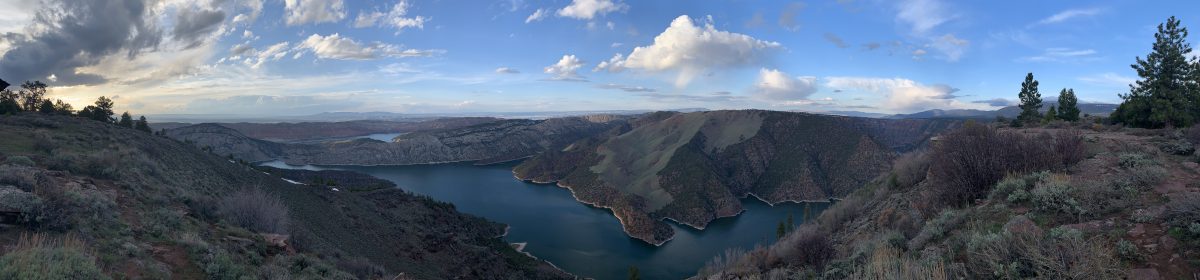
Near our camping spot at dusk. This is looking towards the Navajo Nation.

Brief Background

My Husband

My husband, John, has a mild traumatic brain injury (TBI). The TBI he got that was catastrophic he received in 2010, as a law enforcement officer. He had many previous TBI’s he received while serving in the United States Marine Corps and these made the one in 2010 life changing.

John is medically retired. He needs structure, routine, and patience. He suffers from headaches, executive functioning issues, and other symptoms like vertigo, tinnitus, and vision problems if he gets symptomatic.

Me

My name is Erin. I am healthy and do not have any TBI’s and have never even been knocked unconscious nor ever been in a bad accident or suffered a severe injury. I have a full time job outside the home. In rare moments of down time, I enjoy reading, working out, and cooking. I have a calm demeanor and a positive perspective on life.

We are the parents to a happy, healthy little girl who constantly keeps us on our toes.

Welcome

I created this blog with the hope that it will be helpful for people who have someone in their life who has a traumatic brain injury (TBI).

I am not an expert in TBI’s, apart from my own life experiences with my husband who has a TBI. Here, I plan to share our story, frustrations, joys, and thoughts.